
 Recent
U.S. military action in Venezuela, including the capture of President Nicolás Maduro, marks a dramatic shift in U.S. foreign policy toward unilateral military interventions. According to reporting, this intervention reflects a broader Trump strategy to assert American domination of geostrategic regions and valuable resources like oil — without international or regional support.
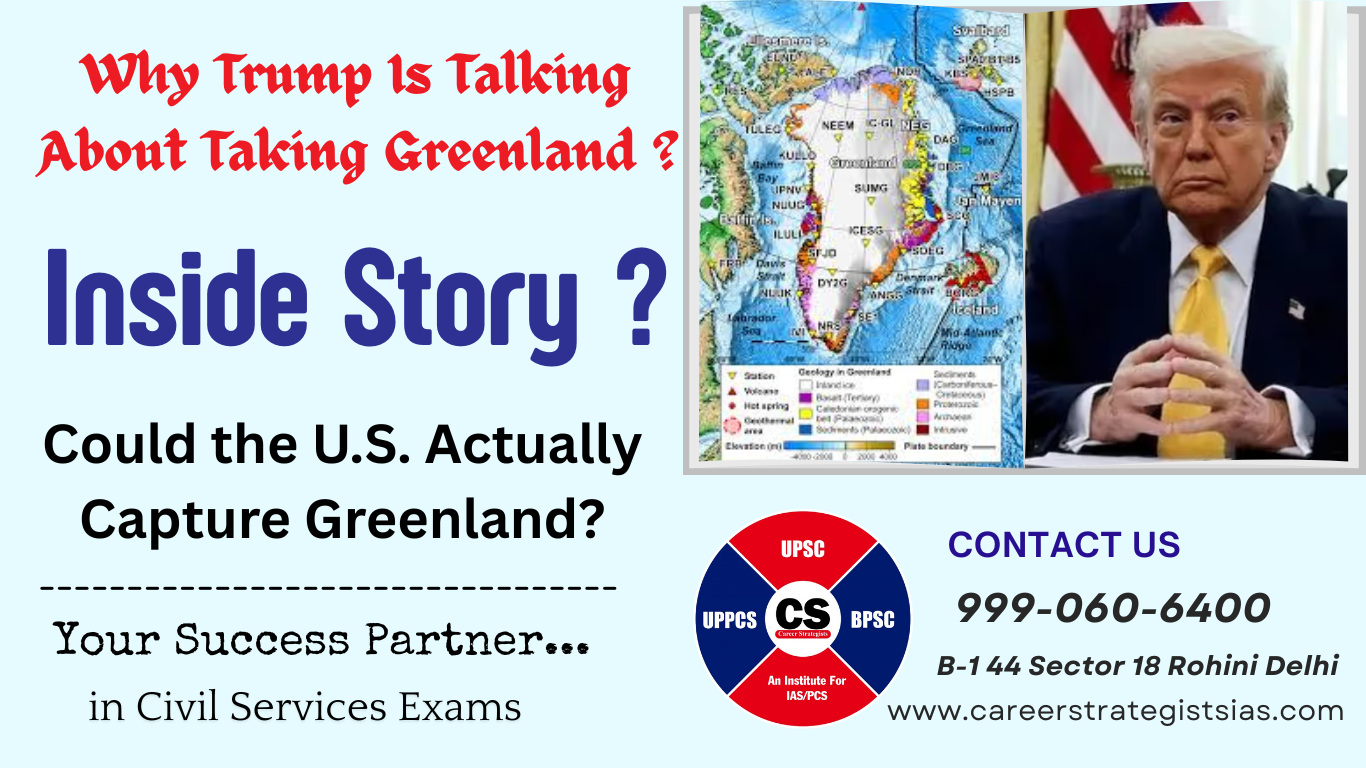
In that context, Trump’s aggressive rhetoric about Greenland is being interpreted not as a negotiation tactic but as part of an overarching doctrine of assertive U.S. control over territory considered strategically vital.
At present:
-
- Greenland is a self-governing territory within the Kingdom of Denmark, which controls its foreign affairs and defense.
-
- Under international law, Greenland is not for sale, and Greenlandic and Danish leaders have strongly rejected U.S. remarks.
-
- Trump has not yet launched military operations, but senior U.S. officials have stated military options are on the table.
So, while a military seizure is not a fait accompli, the fact that it’s being publicly discussed is unprecedented and extremely troubling to allies.

 Breaking the Alliance
-
- Denmark’s Prime Minister said a U.S. military attack on Greenland would mean “the end of NATO.”
-
- NATO’s Article 5 says an attack on one member is an attack on all — but if a major NATO member (the U.S.) attacks territory belonging to another (Denmark), the alliance’s credibility would collapse.
Europe is alarmed:
-
- Danish, Greenlandic, Nordic, and EU leaders have condemned U.S. rhetoric and emphasized sovereignty and respect for international law.
-
- Some analysts argue that Scandinavian and European states may seek alternate defense structures or closer cooperation outside NATO if trust breaks down.
Trans-Atlantic Relations at Risk
Even allied cooperation on Ukraine support, counter-Russia strategy, and Arctic policy could fracture if the U.S. appears to threaten a NATO partner’s territory.
 Russia
Moscow is likely encouraged by Western disunity — a U.S. focus on Greenland could distract NATO from countering Russian activities in the Arctic and Eastern Europe.
China
China views the Arctic as a growing sphere of competition and could expand its economic investments, especially if Western alliances appear unstable.
Latin America
The Venezuela operation already sparked sharp criticism across the region for violating sovereignty and international norms. A push for Greenland suggests to many that the U.S. is reverting to an aggressive, unilateral foreign policy model that future administrations might emulate elsewhere.

 Summary: What’s Really at Stake
| Issue | Implication |
|---|---|
| U.S. Desire for Greenland | Strategic Arctic dominance, resources, and military positioning. |
| NATO Stability | A U.S. attack on a NATO ally’s territory risks collapsing the alliance. |
| International Law | Annexation or force would violate norms and set dangerous precedents. |
| Global Alliances | Europe and other partners could rethink security cooperation. |
| Great-Power Competition | Russia and China could exploit Western divisions. |
 Final Thought
Trump’s Greenland ambitions, along with the Venezuela intervention, represent a newly assertive and unilateral turn in American policy — one that prioritizes territorial control and strategic leverage over alliances and international norms. If pushed beyond rhetoric into action, this could reshape global diplomacy, fracture long-standing alliances like NATO, and trigger a more fragmented and competitive international order.

